Summer Lawn Survival Guide: Keep Your Grass Green, Even in Heatwaves

Keep Your Grass Green, Even in Heatwaves
Maintaining a lush, green lawn during a Utah summer can feel like an uphill battle against heat, drought, and intense sunlight.
However, with the right techniques and a thoughtful approach, it is entirely possible to keep your grass healthy and vibrant even during prolonged heatwaves.
Utah’s unique climate, marked by low humidity, high elevation, and intense sun exposure, places additional stress on traditional cool-season grasses like Kentucky bluegrass and fescue.
Understanding how these conditions affect your lawn is the first step toward managing them effectively.
This guide addresses the most common questions homeowners have and provides practical, easy-to-apply strategies.
Each section is designed to help you better understand not just what to do, but why it works.
Watering Questions (The Foundation of Summer Lawn Health)
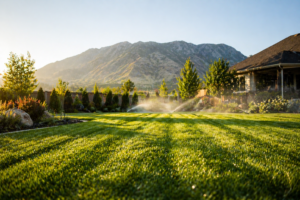 How much water does a lawn need in a Utah summer?
Most lawns require approximately one to one and a half inches of water per week, though Utah’s dry climate often pushes that requirement toward the higher end.
Because evaporation rates are significantly higher, you may need to monitor soil moisture more closely than in more humid regions.
The best way to measure watering is to place a small container on your lawn while irrigating.
Once it collects about one inch of water, you have a reliable benchmark for your weekly watering needs.
Is it better to water every day or less often?
Watering deeply and less frequently is far more effective than applying small amounts of water each day.
This approach encourages roots to grow deeper into the soil, making your lawn more resilient during periods of heat and drought.
Frequent shallow watering leads to weak, shallow root systems.
These roots dry out quickly, causing grass to become stressed much faster in hot conditions.
What time of day should I water my lawn?
The optimal time to water your lawn is early in the morning, typically between 5 a.m. and 9 a.m.
At this time, temperatures are cooler and winds are calmer, allowing water to soak into the soil rather than evaporate.
Watering in the evening may seem convenient, but it can leave grass damp overnight.
This prolonged moisture can increase the risk of fungal diseases.
How do I know if I’m overwatering or underwatering?
An overwatered lawn often feels soft or spongy underfoot and may develop fungus or moss.
You may also notice a persistent dampness in the soil even on hot days.
An underwatered lawn, on the other hand, may appear dull or bluish-gray.
Footprints may linger on the grass, indicating that it is lacking sufficient moisture.
What does heat stress look like in grass?
Heat-stressed grass typically begins to wilt and lose its vibrant green color.
It may take on a grayish tint and stop growing as it conserves energy.
This is often a protective response rather than permanent damage.
With proper watering and care, many lawns can recover once temperatures moderate.
Mowing Questions
How short should I cut my grass in hot weather?
During the summer months, it is best to maintain a taller mowing height, typically between three and four inches.
Longer grass blades provide natural shade for the soil, helping to reduce evaporation and keep roots cooler.
Cutting grass too short, often referred to as “scalping,” exposes the soil to direct sunlight.
This accelerates moisture loss and increases stress on the lawn.
How often should I mow during summer?
Most lawns benefit from mowing approximately once per week, though growth rates may slow during extreme heat.
Instead of sticking to a rigid schedule, adjust your mowing frequency based on how quickly the grass is growing.
A helpful rule is to never remove more than one-third of the grass blade at a time.
Following this guideline helps prevent shock and maintains consistent health.
Should I leave grass clippings or bag them?
Leaving grass clippings on the lawn, a practice known as mulching, can significantly benefit your lawn.
As clippings decompose, they return nutrients such as nitrogen back into the soil.
Mulching also helps retain moisture by creating a light protective layer over the soil.
This can be especially valuable during hot, dry periods.
Why do dull mower blades damage grass?
Dull mower blades tear the grass rather than cutting it cleanly.
This results in frayed edges that turn brown and increase the lawn’s overall stress.
Clean cuts, by contrast, heal more quickly and retain moisture more effectively.
Sharpening your mower blades regularly is a simple but impactful step.
Does mowing direction matter?
Changing your mowing direction each time you cut your lawn can prevent soil compaction.
It also encourages grass togrow more upright rather than leaning in one direction.
Over time, this practice contributes to a fuller and more uniform appearance.
It can also reduce the formation of ruts or uneven areas.
Soil and Fertilizer Questions
Should I fertilize during summer or avoid it?
Heavy fertilization during peak summer heat is generally discouraged.
Excess nutrients can stimulate growth at a time when the lawn is already under stress.
If your lawn appears weak or discolored, a light application of slow-release fertilizer may help.
This provides nutrients gradually without overwhelming the grass.
What type of fertilizer is best for hot weather?
Slow-release or organic fertilizers are typically the safest options during warmer months.
They break down over time, delivering a steady supply of nutrients.
Quick-release fertilizers can cause rapid growth, which increases water demand.
In extreme heat, this can lead to further stress or even burning.
How important is soil health for keeping grass green?
Healthy soil is the foundation of a resilient and vibrant lawn.
It determines how well water is retained and how effectively nutrients are absorbed.
In Utah, soils are often compacted or alkaline, which can limit grass growth.
Improving soil structure through aeration and organic matter can make a significant difference.
Should I test my soil before treating my lawn?
Conducting a soil test is one of the most effective ways to understand your lawn’s needs.
It provides information about nutrient levels and pH balance.
Without this information, you may be applying products unnecessarily or incorrectly.
A targeted approach is both more effective and more environmentally responsible.
What does lime actually do?
Lime is used to raise soil pH, making it less acidic.
This can improve nutrient availability in certain conditions.
However, many Utah soils are already alkaline.
Applying lime without a soil test can disrupt the balance and harm your lawn.
Weed and Pest Control Questions
Why do weeds take over in summer?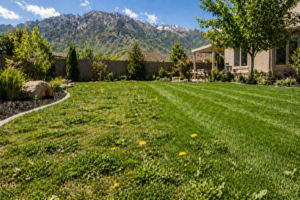
Weeds thrive when lawns become stressed, thin, or weakened.
Gaps in the grass create opportunities for weeds to establish themselves.
Hot weather often slows grass growth, giving weeds a competitive advantage.
Maintaining a thick, healthy lawn is one of the best defenses.
How do I prevent crabgrass before it starts?
The most effective strategy is to apply a pre-emergent herbicide in early spring.
This prevents crabgrass seeds from germinating.
In addition, proper mowing and watering practices help maintain dense turf.
A healthy lawn naturally crowds out many types of weeds.
What are grubs and how do they damage lawns?
Grubs are the larvae of beetles that feed on grass roots beneath the soil.
As they consume roots, they weaken the grass and reduce its ability to absorb water.
Affected areas may turn brown and can often be lifted easily from the ground.
This damage can resemble drought stress but requires different treatment.
Can I control weeds without harming my grass?
Selective herbicides are designed to target specific weeds while leaving grass unharmed.
These products can be highly effective when used correctly.
Spot-treating weeds rather than applying chemicals broadly is often the best approach.
This minimizes environmental impact while addressing the problem directly.
Are natural pest control methods effective?
Natural methods, such as beneficial nematodes or organic sprays, can provide some control.
However, their effectiveness may vary depending on conditions.
They are often most successful when combined with strong cultural practices.
Healthy lawns are naturally more resistant to pests and disease.
Heat and Drought Questions (Adapting to Utah’s Climate)
Why does my lawn turn brown in extreme heat?
During periods of extreme heat, grass may enter a semi-dormant state to conserve water.
This process reduces growth and causes the lawn to lose its green color.
Although the appearance may be concerning, this is often a temporary condition.
The grass is conserving resources until more favorable conditions return.
Can grass go dormant and still recover?
Dormant grass is not dead and can recover when temperatures cool and moisture increases.
With consistent care, it can regain its green color relatively quickly.
The key is to prevent prolonged drought that damages roots.
Maintaining minimal watering can help sustain the lawn during dormancy.
How do I protect my lawn during drought?
During drought conditions, it is important to water deeply but less frequently.
This ensures that moisture reaches the root zone where it is most needed.
Reducing mowing frequency and avoiding fertilization can also help.
These steps minimize stress and allow the lawn to conserve energy.
Should I water differently during heat waves?
During extreme heat, you may need to slightly increase watering to compensate for higher evaporation.
However, it is still important to avoid overwatering.
Focus on maintaining consistent soil moisture rather than surface wetness.
Deep, infrequent watering remains the most effective strategy.
How does shade vs full sun affect lawn health?
Shaded areas tend to retain moisture longer and remain cooler throughout the day.
As a result, they often stay greener with less effort.
Lawns in full sun require more attentive care, particularly with watering and mowing.
Understanding these differences allows you to tailor your approach across your yard.
Repair and Recovery Questions?
How do I fix brown or dead patches in summer?
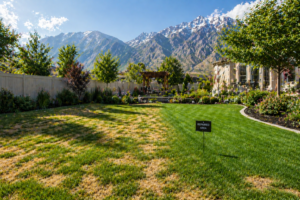 Small patches can be improved by loosening the soil and maintaining consistent moisture.
However, results may be limited due to high temperatures.
For more reliable outcomes, major repairs are best completed inearly fall.
Cooler conditions support better seed germination and root development.
Can I reseed during hot weather?
Reseeding in summer is possible but often challenging.
Seeds require consistent moisture, which can be difficult to maintain in heat.
High temperatures can also reduce germination rates.
Waiting until fall generally produces stronger, more uniform growth.
When should I aerate my lawn?
Aeration is most effective in early fall when temperatures begin to cool.
This allows roots to expand and absorb nutrients more efficiently.
In compacted soils, aeration can significantly improve water infiltration.
This is particularly beneficial in Utah’s often dense soil conditions.
What’s the fastest way to thicken thin grass?
Improving watering and mowing practices can produce noticeable improvements over time.
Consistent care helps existing grass grow more densely.
For long-term results, overseeding during cooler seasons is the most effective method.
This introduces new grass and fills in thin areas.
How long does it take grass to recover?
Recovery timelines vary depending on the severity of damage and environmental conditions.
With proper care, many lawns begin to improve within a few weeks.
More significant damage may take longer to repair.
Patience and consistency are essential for long-term success.
Smart Lawn Care Questions
What is the best summer lawn care schedule?
An effective routine includes early morning watering, consistent mowing, and regular observation.
Adjustments should be made based on weather patterns and your lawn’s specific needs.
Flexibility is key, as no two lawns respond exactly the same way.
Paying attention to subtle changes can help you respond before problems escalate.
How can I reduce water usage but keep grass green?
Efficient watering practices, such as deep irrigation and proper timing, can significantly reduce water waste.
Using well-maintained sprinklers ensures even coverage and prevents runoff.
Maintaining healthy soil and proper mowing height also improves water retention.
These small adjustments can lead to meaningful savings over time.
Are smart irrigation systems worth it?
Smart irrigation systems can be especially valuable in dry climates like Utah.
They automatically adjust watering schedules based on weather conditions.
This not only conserves water but also improves lawn health.
Over time, the efficiency gains can offset the initial investment.
What tools actually make a difference?
A reliable sprinkler system, a mower with sharp blades, and a soil testing kit are essential.
These tools directly influence the effectiveness of your lawn care routine.
Additional tools, such as moisture meters, can provide even greater precision.
Investing in the right equipment simplifies long-term maintenance.
What are the biggest mistakes homeowners make?
Common mistakes include overwatering, mowing too short, and fertilizing during extreme heat.
These practices can weaken the lawn and make it more vulnerable to stress.
Ignoring early warning signs is another frequent issue.
Addressing problems early is far easier than repairing widespread damage later.